

Hoe verskillende ekstrusiestelsels opstapel vir vervaardiging
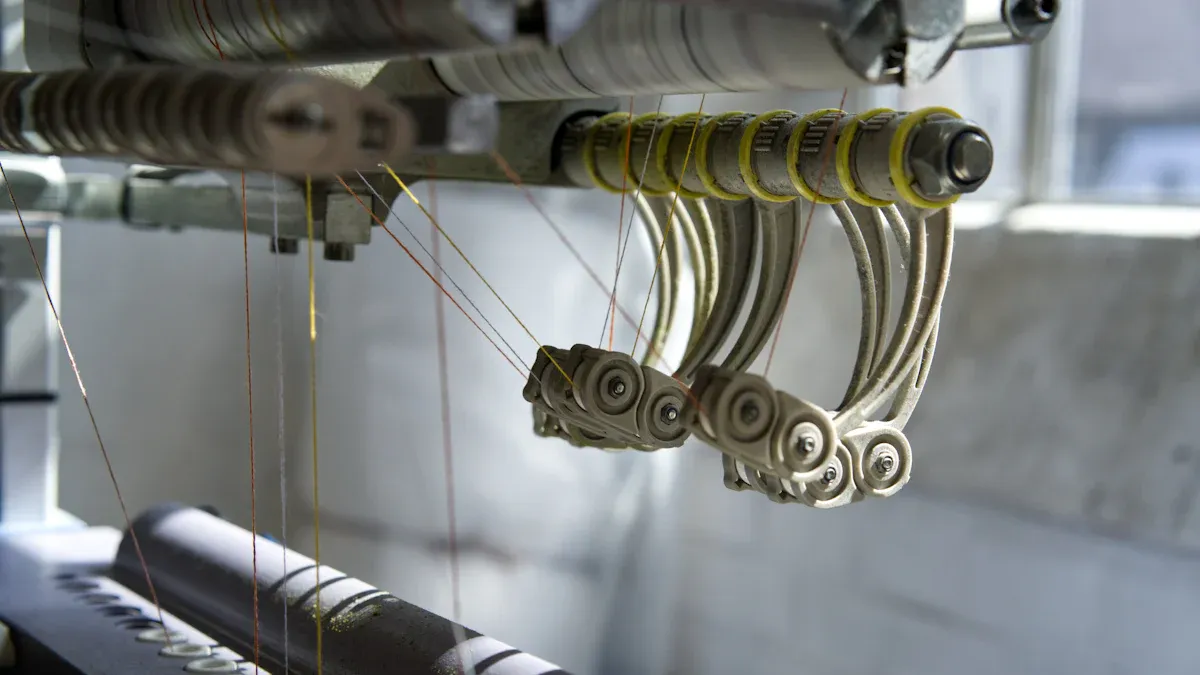
Ek het gesien dat die keuse van ekstrusiestelsel die hele vervaardigingsproses vorm. Die meeste vervaardigers gebruik enkelskroefstelsels, wat 'n hou 62% markaandeel, terwyl dubbelskroefstelsels verantwoordelik is 38%.
| Tipe ekstrusiestelsel | Markaandeel persentasie |
|---|---|
| Enkelskroef | 62% |
| Dubbelskroef | 38% |
Die keuse tussen skroeftipes beïnvloed doeltreffendheid, produk kwaliteit, en materiaalversoenbaarheid. Wanneer ek ekstrusie-tegnologie pas by vervaardigingsdoelwitte, Ek merk verbeterings in koste-effektiwiteit, ontwerp veelsydigheid, en volhoubaarheid.
| Faktor | Impak op vervaardigingsdoeltreffendheid | Impak op produkkwaliteit |
|---|---|---|
| Beheerde parameters | Handhaaf eenvormige produkkwaliteit | Bereik mikrometer toleransies |
Ek maak staat op Complete Extrusion Systems om konsekwente resultate en presiese skroefwerkverrigting te lewer.
Sleutel wegneemetes
- Kies die regte ekstrusiestelsel gebaseer op jou vervaardigingsdoelwitte en materiaal eienskappe om optimale werkverrigting te verseker.
- Enkelskroef-ekstruders is ideaal vir hoëvolume-produksie van eenvoudige materiale, terwyl tweeskroefstelsels uitblink in die vermenging van komplekse materiale.
- Gereelde instandhouding en monitering van ekstrusiestelsels voorkom stilstand en verbeter doeltreffendheid, verseker konsekwente kwaliteit van die produk.
- Neem die skroefdeursnee en L/D-verhouding in ag wanneer u 'n ekstruder kies, aangesien hierdie faktore deurset- en mengdoeltreffendheid beïnvloed.
- Gebruik mede-ekstrusie vir die skep van meerlaagse produkte wat verskillende materiale kombineer, funksionaliteit en werkverrigting te verbeter.
- Evalueer die versoenbaarheid van materiale met die gekose ekstrusiestelsel om defekte te vermy en hoë kwaliteit uitset te verseker.
- Bly op hoogte van opkomende neigings in ekstrusietegnologie, soos IoT en AI, om doeltreffendheid te verbeter en by veranderende produksiebehoeftes aan te pas.
- Skep 'n kontrolelys van sleutelfaktore voordat u 'n ekstrusie masjien om duur foute te vermy en te verseker dat die stelsel aan toepassingsvereistes voldoen.
Die keuse van die regte ekstrusiestelsel vir vervaardiging
Sleutelfaktore in Stelselkeuse
Ek vind nooit 'n universele nie “beste” ekstrusie stelsel. My experience tells me that the ideal choice depends on the manufacturing goals, materiaal eienskappe, and product requirements. When I select an extrusion system, I always match its capabilities to the intended application. This approach ensures that the extrusion process delivers consistent quality and optimal performance.
I consider several critical factors before making an extrusion machine selection. I use the following table to guide my decision:
| Faktor | Beskrywing |
|---|---|
| Research Objective | Purpose of the machine (education, material development, or commercial pilot production) |
| Materiaal tipe | Type of polymers to be processed (hitte-sensitief, volatile, or reactive) |
| Required Output Capacity | Deursetkapasiteit (grams or kilograms per hour) |
| Advanced Process Requirements | Need for gas injection, vakuum ontgassing, or reactive extrusion capability |
| Budget and Laboratory Space | Consideration for modular expansion for future upgrades |
| Future Scale-Up Needs | Verenigbaarheid met industriële ekstrusiemodules om produksie op te skaal |
Ek let altyd op die skroefdeursnee en L/D-verhouding. Hierdie parameters bepaal deursetkapasiteit en mengdoeltreffendheid. Ek kies 'n ekstruder met die regte uitsetkapasiteit, wat kan wissel van 0.25 kg/h aan 150 kg/h afhangende van die model. Modulêre ontwerp stel my in staat om komponente vinnig te vervang, wat buigsaamheid vir navorsing en ontwikkeling gee. Ek maak staat op gevorderde beheerstelsels, soos PLC en HMI, om presiese beheer en datanaspeurbaarheid te bereik.
Wanneer ek tipes ekstrusiemasjiene evalueer, Ek oorweeg die kompleksiteit van die profiel en die toleransies wat vereis word. Ingewikkelde ontwerpe vereis presiese gereedskap en kan koste verhoog. Ek kyk ook na bestelhoeveelheid. Hoër volumes verminder die koste per eenheid omdat opstelkoste oor meer eenhede versprei. Afwerking en sekondêre bewerkings, soos anodisering of CNC-bewerking, waarde en koste toevoeg.
Wenk: Ek beveel aan dat u 'n kontrolelys van hierdie faktore maak voordat u met die seleksieproses van die ekstrusiemasjien begin. Hierdie praktyk help om duur foute te vermy en verseker dat die stelsel ooreenstem met die beoogde toepassings.
Impak op vervaardigingsdoeltreffendheid
Ek merk op dat die ekstrusiestelsel wat ek kies, die vervaardigingsdoeltreffendheid direk beïnvloed. Die skroef ontwerp, mengvermoë, en ekstrusietegnologie speel almal 'n rol in hoe glad die proses verloop. Byvoorbeeld, a enkelskroef-ekstruder werk dikwels goed vir eenvoudige polimere en hoëvolume produksie. Dubbelskroef-ekstruders hanteer komplekse materiale en gevorderde toepassings, soos reaktiewe ekstrusie of spesialiteitsmengsels.
Ek het gesien dat hoë viskositeit en vaste inhoud in energieke materiale verstopping kan veroorsaak, onstabiele ekstrusie, en spuitpuntslytasie. Hierdie kwessies verminder doeltreffendheid en kompromie veiligheid. Ek spreek hierdie uitdagings aan deur die kniestelselontwerp te optimaliseer. Verbeterde menguniformiteit en ekstruderingsakkuraatheid verbeter beide veiligheid en doeltreffendheid.
Ek gebruik 'n twee-stadium dubbelskroef-ekstruderingstelsel wanneer ek groter stabiliteit en aanpasbaarheid benodig. Simulasies toon dat hierdie ontwerp vloeieienskappe verbeter en konsekwente uitset handhaaf. Ek monitor altyd die ekstrusieproses om eenvormige kwaliteit te verseker en stilstand te minimaliseer.
| Tipe Getuienis | Beskrywing |
|---|---|
| Uitdagings in Additiewe Vervaardiging | Hoë viskositeit en soliede inhoud van energieke materiale lei tot probleme soos verstopping, onstabiele ekstrusie, en spuitpuntslytasie, doeltreffendheid en veiligheid beïnvloed. |
| Kniestelselprestasie | Die kniestelsel se ontwerp beïnvloed die eenvormigheid van materiaalmenging en ekstruderingsakkuraatheid, met spesifieke optimaliserings voorgestel om veiligheid en doeltreffendheid te verbeter. |
| Ekstrusiestelselontwerp | 'n Twee-fase dubbelskroef-ekstrusiestelsel is ontwerp om stabiliteit en aanpasbaarheid in die ekstrusieproses te verbeter, met simulasies wat vloeieienskappe van verskillende stelsels openbaar. |
Ek pas altyd die ekstrusiestelsel by die produksievereistes. Hierdie praktyk verseker dat die ekstruder die verlangde kwaliteit en werkverrigting lewer. Ek kies die skroefkonfigurasie gebaseer op die materiaaltipe en die kompleksiteit van die toepassing. Ek maak staat op gevorderde ekstrusietegnologie om doeltreffendheid te maksimeer en hoë standaarde van produkkwaliteit te handhaaf.
Let wel: Ek beveel gereelde instandhouding en prosesmonitering aan om piekdoeltreffendheid te handhaaf en onverwagte stilstand te voorkom.
Tipes volledige ekstrusiestelsels
Wanneer ek volledige ekstrusiestelsels vir vervaardiging evalueer, Ek begin altyd deur die hoof te identifiseer tipes ekstrusie masjiene. Die mees algemene opsies sluit in enkelskroef-ekstrusiemasjiene, dubbelskroef ekstrusie masjiene, en ram ekstrusie masjiene. Elke stelsel bied unieke sterkpunte en beperkings, daarom fokus ek daarop om die regte tegnologie by die toepassing te pas.
| Tipe ekstrusiemasjien |
|---|
| Enkelskroef-ekstrusiemasjiene |
| Dubbelskroef-ekstrusiemasjiene |
| Ram Ekstrusie masjiene |
Enkelskroef-ekstrudering
Ek gebruik dikwels 'n enkelskroef-ekstruder vir eenvoudige ekstrusieprosesse. Hierdie masjien het een roterende skroef binne 'n verhitte loop. Die skroef stoot materiaal vorentoe, smelt dit, en vorm dit deur 'n dobbelsteen. Ek maak staat op hierdie stelsel vir hoëvolume-produksie van termoplastiek, voedselprodukte, en rubberverbindings. Die eenvoud van die ontwerp maak dit maklik om te bedryf en in stand te hou.
| Nywerheid | Toepassingsbeskrywing | Markgroeivoorspellings |
|---|---|---|
| Plastiek | Smelt en vorming van termoplastiek, aangedryf deur stygende PE- en PP-gebruik. | CAGR van ongeveer 4-5% deur 2030 |
| Voedselverwerking | Produseer verwerkte voedsel soos versnaperinge en graan. | Mark om oor te bereik $75 miljard by 2026 |
| Rubber samestelling | Meng en vorm rubber vir bande en motoronderdele. | Bandeproduksie te oortref 2 miljard eenhede deur 2025 |
| Biomedies | Biopolimeerproduksie vir verpakking en mediese toestelle. | Ontluikende mark met nuwe ekstrusie-tegnologie |
Egter, Ek herken die beperkings van enkelskroef-ekstrusie. Dit kan moeilik wees om eenvormige vermenging te bereik, veral as ek vullers of bymiddels byvoeg. Drukkonsekwentheid wissel dikwels met grondstofveranderinge, en hoë-viskositeit materiale mag dalk nie goed vloei nie, lei tot gebreke. Hierdie uitdagings lei my ekstrusiemasjienkeuse wanneer ek hoër kwaliteit of meer komplekse verwerking benodig.
Wenk: Vir eenvoudig, hoëvolume toepassings, Ek beveel aan om met 'n enkelskroef-ekstruder te begin. Vir gevorderde vermenging of spesiale materiale, oorweeg ander opsies.
Dubbelskroef-ekstrudering
Wanneer ek gevorderde verwerking benodig, Ek draai na dubbelskroef-ekstruder tegnologie. Hierdie stelsel gebruik twee skroewe wat saam in die loop draai. Die skroewe kan inmekaar steek of parallel loop, afhangende van die ontwerp. Ek vind dat dubbelskroef-ekstruders uitstekende mengdoeltreffendheid lewer, beter plastisering vir hoë-viskositeit materiale, en verbeterde beheer oor temperatuur en druk. Hierdie kenmerke verbeter produkkwaliteit en proseskonsekwentheid.
Dubbelskroef-ekstrusie stel my ook in staat om verskeie verwerkingsstappe in een masjien uit te voer. Ek kan meng, smelt, vent, en selfs materiaal reageer tydens 'n enkele pas. Hierdie buigsaamheid verminder vermorsing en versnel produksie. Wanneer tweeskroef vs enkelskroef-ekstruders vergelyk word, Ek sien vinniger opbrengs op belegging en meer eenvormige resultate met dubbelskroefstelsels, veral vir komplekse mengsels of herwonne plastiek.
Tweeling-skroef subtipes
Ek oorweeg altyd die verskillende tipes ekstrudermasjiene binne die dubbelskroefkategorie. Die skroefkonfigurasie beïnvloed werkverrigting, doeltreffendheid, en die reeks toepassings.
Vermenging
Ineenlopende dubbelskroef-ekstruders het skroewe wat oorvleuel en inmekaar pas. Hierdie ontwerp bied presiese materiaal vervoer en hoë skuifkragte. Ek gebruik intermetting-stelsels vir verbeterde samestelling en versoenbaarheid, veral wanneer ek bymiddels of vullers eweredig moet versprei.
Nie-vermengd
Twee-skroef-ekstruders wat nie inmekaar steek nie, het skroewe wat roteer sonder om te oorvleuel. Hierdie opstelling bied sagter vermenging en minder skuif. Ek kies ontwerpe wat nie ineenmekaar is nie vir sensitiewe materiale wat minimale meganiese spanning vereis.
Ko-roteer
Mede-roterende dubbelskroef-ekstruders het skroewe wat in dieselfde rigting draai. Hierdie subtipe blink uit in die vermenging van doeltreffendheid en materiaalvervoer. Ek gebruik ko-roterende stelsels vir reaktiewe ekstrusie, devolatilisering, en hoëprestasie polimeersamestelling. Egter, hoë skuiftempo's kan hitte-sensitiewe materiale afbreek, so ek monitor skroefontwerp en verkoeling noukeurig.
| Subtipe | Verwerkingsvermoëns en voordele | Beperkings en oorwegings | Beste toepassings |
|---|---|---|---|
| Mede-roterende dubbelskroef-ekstruder | Hoë mengdoeltreffendheid, geskik vir reaktiewe ekstrusie, hoë skuifkoerse | Risiko van materiaaldegradasie, vereis presiese skroefontwerp | Polimeer samestelling, nanosamestellings, laboratorium-tot-produksie werkvloeie |
Teen-roterende
Teen-roterende dubbelskroef-ekstruders het skroewe wat in teenoorgestelde rigtings draai. Hierdie konfigurasie genereer laer skuifkragte, wat brose materiale beskerm. Ek maak staat op teen-roterende stelsels vir keramiek, bio-polimere, en farmaseutiese formulerings. Die ontwerp sorg ook vir goeie drukopbou en effektiewe verseëling, alhoewel mengintensiteit laer is as met ko-roterende stelsels.
| Subtipe | Verwerkingsvermoëns en voordele | Beperkings en oorwegings | Beste toepassings |
|---|---|---|---|
| Teen-roterende dubbelskroef-ekstruder | Laer skuifkragte, goeie drukopbou, effektiewe verseëling | Laer mengintensiteit, meer komplekse seël- en laerontwerp | Keramiek, bio-polimere, farmaseutiese produkte |
Wanneer ek 'n volledige ekstrusiestelsel kies, Ek pas altyd die skroeftipe en konfigurasie by die materiaal- en prosesvereistes. Hierdie benadering verseker hoë gehalte, doeltreffendheid, en betroubare werkverrigting oor alle toepassings.
Ram Ekstrusie
Ek kies dikwels ram-ekstrusie wanneer ek materiaal moet verwerk wat hoë druk en presiese vorming vereis. Hierdie metode gebruik 'n hidrouliese ram om materiaal deur 'n verhitte loop te druk en dood te gaan, eerder as om op 'n roterende skroef staat te maak. Ek vind ram-ekstruders veral nuttig om produkte van termohardende plastiek te vorm, keramiek, en PTFE. Die proses laat my toe om stokke te skep, buise, en profiele met konsekwente afmetings.
Ram-ekstrudering staan uit onder tipes ekstrusiemasjiene omdat dit materiaal hanteer wat tradisionele skroef-ekstruders nie doeltreffend kan verwerk nie. Ek gebruik hierdie tegnologie in nywerhede soos plastiek, kos, en farmaseutiese produkte. Byvoorbeeld, Ek produseer versnaperinge en graankos met unieke vorms, en ek vervaardig tablette en kapsules met presiese spesifikasies.
Ek het verskeie voordele en uitdagings opgemerk met die gebruik van ram-ekstruders:
- Ram-ekstruders blink uit in die vervaardiging van hoë gehalte produkte van moeilik verwerkbare materiale.
- Ek maak staat op hulle vir toepassings waar skroef-ekstruderingstegnologie te kort skiet, soos PTFE en keramiekprofiele.
- Die proses lewer konsekwente kwaliteit en dimensionele akkuraatheid.
- Hoë bedryfskoste kan doeltreffendheid en algehele prestasie beïnvloed.
- Streng regulasies in plastiekvervaardiging vereis noukeurige prosesbeheer.
- Mededinging van alternatiewe ekstrusiestelsels dryf my om my ekstrusiemasjienkeuse te optimaliseer.
Ek weeg altyd hierdie faktore op voor ek ram-ekstrudering vir volledige ekstrusiestelsels kies. Ek monitor die proses noukeurig om kwaliteit en doeltreffendheid te handhaaf, veral wanneer daar met spesiale materiale gewerk word.
Mede-ekstrusie
Ko-ekstrudering stel my in staat om verskeie materiale in 'n enkele produk te kombineer, die skep van meerlaagse profiele met verbeterde eienskappe. Ek gebruik hierdie ekstrusie-tegnologie om verskillende termoplaste te integreer, elke laag bied unieke eienskappe. Die proses behels die druk van verskeie materiale deur 'n enkele matrys, lei tot 'n verenigde profiel wat aan komplekse produksievereistes voldoen.
Ek maak staat op ko-ekstrusie vir die vervaardiging van produkte wat duursaamheid vereis, buigsaamheid, en estetiese aantrekkingskrag. This method allows me to tailor the quality of each layer, improving performance and functionality. I see co-extrusion as a key advancement in complete extrusion systems, especially when I need to produce items with specialized features.
Industries benefit from co-extrusion in several ways:
- Konstruksie: I manufacture window sills, rame, and trim pieces that combine strength and visual appeal.
- Retail: I build shelving and display systems that are both durable and attractive.
- Tekens: I produce illuminated signs and frames with clean finishes and reliable performance.
Co-extrusion expands the range of applications for extrusion technology. I use it to meet demanding production goals and deliver products with superior quality. When I select an extruder for co-extrusion, I consider screw design, process control, en materiaalversoenbaarheid. Hierdie benadering verseker doeltreffendheid en konsekwente resultate.
Wenk: Ek beveel mede-ekstrudering aan vir projekte wat veellaagde profiele en verbeterde produkfunksionaliteit vereis. Versigtige ekstrusiemasjienkeuse en prosesmonitering is noodsaaklik vir die bereiking van optimale gehalte.
Struktuur en werking van ekstrusiestelsels
Skroef en vat ontwerp
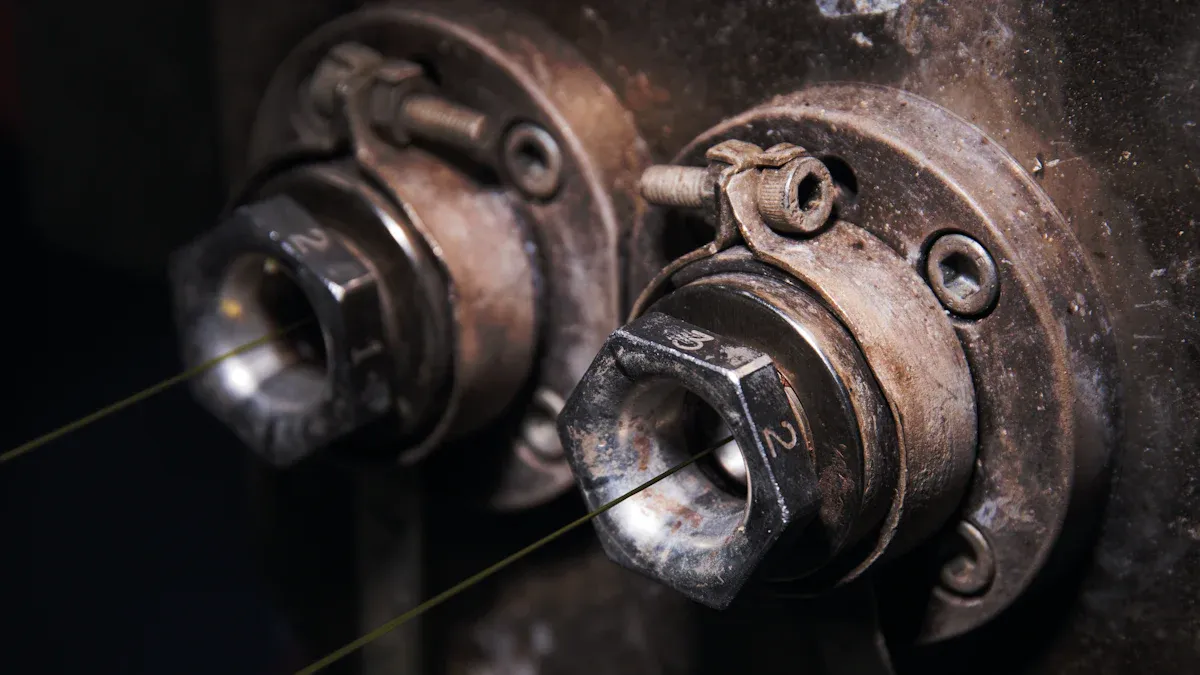
Ek begin altyd my ekstrusiemasjienkeuse deur die skroef- en vatontwerp te ondersoek. Die geometrie van die skroef bepaal hoe doeltreffend die ekstruder smelt, meng, en dra materiaal oor. Ek pas die lengte-tot-deursnee aan (L/D) verhouding om verblyftyd en vermenging te beheer. ’n Hoër L/D-verhouding laat die materiaal toe om meer deeglik te smelt en te meng, wat noodsaaklik is vir die bereiking van eenvormige kwaliteit in die finale produk. Ek maak staat op versperringsontwerpe in die skroefvat om smeltstabiliteit te handhaaf en agteruitgang te voorkom, veral wanneer ek sensitiewe materiaal verwerk. Parallelle dubbelskroef en loop ontwerpe speel 'n kritieke rol in ekstrusiespoed, produk kwaliteit, en energiedoeltreffendheid. Ek gebruik sonering en presiese temperatuurbeheer om smeltvloei te stabiliseer en vasgevang gasse te vermy, wat digtheid en konsekwentheid verbeter. Die oppervlakafwerking van die loop en die geometrie van die skroef beïnvloed ook energiedoeltreffendheid en produkkonsekwentheid. Ek pas altyd die skroefontwerp by die spesifieke vereistes van die toepassing om prestasie te maksimeer.
- ’n Hoër L/D-verhouding verbeter vermenging en smelt eenvormigheid, wat noodsaaklik is vir produkte van hoë gehalte.
- Versperringsontwerpe help om smeltstabiliteit te handhaaf en agteruitgang te voorkom.
- Screw geometry and barrel surface finish impact energy efficiency and product consistency.
Material Movement and Mixing
I focus on efficient material movement and mixing to ensure the extrusion process runs smoothly. Ek gebruik robust pneumatic or mechanical conveyors to transfer raw materials quickly and with minimal maintenance. Advanced mixer designs guarantee thorough and uniform compounding, which prevents variations in finished products. I integrate automated controls with PLC systems for real-time monitoring and recipe management. This approach allows me to oversee production seamlessly and adjust parameters as needed. I select scalable configurations to accommodate both small workshops and large industrial operations. Enhanced dust control features keep the workplace clean and safe. Konsekwent, homogene mengsels verminder kwaliteit fluktuasies en verbeter deurset. Outomatiese stelsels verminder handhantering, wat produksiesiklusse verkort en arbeidskoste verlaag. Ek prioritiseer altyd hierdie kenmerke wanneer ek tipes ekstrusiemasjiene vir nuwe toepassings evalueer.
| Kenmerk | Beskrywing |
|---|---|
| Doeltreffende materiaaloordrag | Vinnig, lae-onderhoud beweging van grondstowwe |
| Presisie meng | Deeglik, eenvormige samestelling vir konsekwente kwaliteit |
| Outomatiese kontroles | Intydse monitering en resepbestuur |
| Skaalbare konfigurasies | Buigsame uitlegte vir enige produksievermoë |
| Verbeterde stofbeheer | Skoner, veiliger werkplek |
| Verbeterde produkkwaliteit | Homogene mengsels, verminderde fluktuasies |
| Verhoogde deurset | Korter produksiesiklusse, minder handhantering |
| Verminderde afval | Akkurate meting, laer koste |
| Laer Arbeidskoste | Outomatisering bevry personeel vir take met toegevoegde waarde |
| Veiliger werksomgewing | Ingeslote lyne en stofbeheer |
Prosesbeheer en Uitsetkwaliteit
I depend on advanced process control technology to maintain high output quality in extrusion manufacturing. I select high-quality thermoplastics to ensure the final products meet strength, duursaamheid, and flexibility requirements. I monitor extrusion parameters closely to reduce discrepancies during production. Dimensional accuracy remains a top priority for me, as it guarantees that components fit their intended applications. I use surface inspection to detect defects such as warping or air bubbles, which helps me maintain consistent product quality. Early detection of issues reduces waste and saves on production costs. I always ensure that my process complies with regulatory standards, which protects both my business and my customers. High-quality products enhance my brand reputation and increase customer satisfaction. Advanced monitoring systems allow me to increase production speed without sacrificing accuracy, which boosts overall efficiency in complete extrusion systems.
| Element/Advantage | Beskrywing |
|---|---|
| Materiaalkeuse | Ensures strength, duursaamheid, en buigsaamheid |
| Prosesmonitering | Reduces discrepancies and maintains consistency |
| Dimensionele Akkuraatheid | Guarantees proper fit for all applications |
| Oppervlakte inspeksie | Identifies defects early for better quality |
| Consistent Product Quality | Every batch meets high standards |
| Vermindering van afval | Saves material and production costs |
| Regulerende nakoming | Meets legal and safety requirements |
| Kliëntetevredenheid | Builds reputation and loyalty |
| Process Efficiency | Increases speed while maintaining accuracy |
Wenk: I recommend regular calibration and maintenance of all extrusion technology to sustain peak performance and consistent quality.
Comparing the Extrusion Process
Enkelskroef vs. Twin-Screw Process
When I compare enkelskroef- en dubbelskroef-ekstruders, I focus on how each system handles the extrusion process. The screw design shapes the way material moves and mixes. A single-screw extruder uses one helical screw inside a simple, silindriese loop. Daarteenoor, a twin-screw extruder features two intermeshing screws and a more complex, dikwels gesegmenteerde vat. I see that temperature control in single-screw systems remains basic, while twin-screw machines offer advanced control with multiple heating and cooling zones. This difference impacts both throughput and energy efficiency.
| Aspek | Enkelskroef-ekstruder | Dubbelskroef-ekstruder |
|---|---|---|
| Skroef ontwerp | Enkele heliese skroef | Twee ineenlopende skroewe |
| Vatstruktuur | Eenvoudig, silindries | Meer kompleks, dikwels gesegmenteer |
| Temperatuurbeheer | Basiese verwarming/verkoeling | Gevorderd, multi-zone |
| Uitset kapasiteit | Matig | Hoog |
| Energieverbruik | Oor die algemeen hoër | Meer doeltreffend |
| Buigsaamheid in deurset | Beperk | Hoog |
I rely on twin-screw extruders for higher output and better energy efficiency. When I need flexibility in throughput or advanced process control, I choose twin-screw systems. For straightforward applications, single-screw extruders still provide reliable performance.
Material Compatibility in the Extrusion Process
Material compatibility plays a critical role in extrusion machine selection. I always match the screw configuration to the type of material I plan to process. Single-screw extruders handle standard thermoplastics well, but they struggle with materials that require intensive mixing or have high filler content. Twin-screw extruders excel with specialty compounds, herwonne plastiek, en reaktiewe materiale. I use segmented screws to adjust mixing and shearing for each application.
When I work with complete extrusion systems, I consider how each screw design affects the final product. Twin-screw extruders allow me to process a wider range of materials, including those with additives or sensitive properties. This flexibility supports more types of extrusion machines and expands the range of possible applications.
Wenk: I recommend evaluating the chemical and physical properties of your raw materials before choosing an extruder. This step ensures compatibility and reduces the risk of defects.
Produkkwaliteit en konsekwentheid
I know that the extrusion process directly impacts the quality of the finished product. Modern extrusion lines integrate automation and advanced control platforms. These systems analyze multiple variables at once, which helps me maintain consistent quality across every batch.
Quality consistency is a productivity multiplier. Advanced control platforms analyze patterns across multiple variables simultaneously, ensuring that product quality is maintained throughout the extrusion process.
I monitor key factors such as stable melt pressure, uitsettempo, en oppervlakafwerking. Stable melt pressure prevents warping and dimensional drift. Higher and more stable output reduces scrap rates and downtime. Better surface finish and precise dimensional control enhance the impact on the quality of the finished product.
| Sleutelfaktore | Impact on Quality and Consistency |
|---|---|
| Stable melt pressure | Prevents dimensions from drifting or warping |
| Higher and more stable output | Reduces scrap rates and downtime |
| Better surface finish | Enhances overall product quality |
| Dimensionele beheer | Ensures precision in final product specifications |
| Faster ROI | Improves profitability for manufacturers |
Wanneer tweeskroef vs enkelskroef-ekstruders vergelyk word, I see that twin-screw systems deliver better consistency and lower operational cost. I achieve faster ROI and improved performance by investing in advanced extrusion technology. I always prioritize process monitoring and automation to ensure high quality and efficiency in production.
- Higher and more stable output
- Lower scrap and downtime
- Better surface finish and dimensional control
- Reduced operational cost
- Faster ROI
I rely on these strategies to maximize the benefits of extrusion and deliver products that meet strict manufacturing standards.
Performance Comparison Table
Deurset en doeltreffendheid
I always evaluate throughput and efficiency when I compare types of extrusion machines. Throughput measures how much material the extruder processes in a given time. Efficiency reflects how well the screw design converts raw material into finished products with minimal waste and energy use. I see that single-screw extruders often deliver steady throughput for standard polymers. Dubbelskroef-ekstruders, with their advanced screw geometry, handle higher output and maintain better energy efficiency, especially for complex blends.
| Ekstruder tipe | Deurset (kg/h) | Energiedoeltreffendheid | Beste gebruiksgevalle |
|---|---|---|---|
| Enkel-skroef | 50–500 | Matig | Hoë volume, simple polymers |
| Dubbelskroef | 100–1000+ | Hoog | Complex blends, specialty jobs |
| Ram Extruder | 10–100 | Low–Moderate | PTFE, keramiek, spesialiteit |
| Ko-ekstrusiestelsels | Wissel | Hoog | Multi-layered profiles |
I always match the screw configuration to the material and production requirements. This approach ensures the process delivers consistent quality and meets manufacturing goals. I rely on complete extrusion systems to maximize throughput and efficiency for every application.
Wenk: I recommend monitoring energy consumption and output rates regularly. This practice helps optimize extrusion machine selection and reduces operational costs.
Maintenance and Reliability
I prioritize maintenance and reliability when I select an extruder. The screw and barrel experience constant wear from abrasive materials and high temperatures. I schedule routine inspections and replace worn components to prevent unexpected downtime. Single-screw extruders require less maintenance due to their simple design. Dubbelskroef-ekstruders, with more moving parts and segmented screws, need more frequent checks but offer greater flexibility.
| Ekstruder tipe | Onderhoudsbehoeftes | Reliability Level | Common Issues |
|---|---|---|---|
| Enkel-skroef | Low–Moderate | Hoog | Occasional screw wear |
| Dubbelskroef | Moderate–High | Hoog | Segment wear, seal failure |
| Ram Extruder | Matig | Matig | Hydraulic leaks, die wear |
| Ko-ekstrusiestelsels | Hoog (multi-screw) | Hoog | Synchronization, screw wear |
I use advanced monitoring systems to track screw wear and process stability. This strategy improves reliability and extends the life of my extrusion technology. I always keep spare screws and barrels on hand to minimize downtime during maintenance.
Product Complexity and Flexibility
I value design flexibility in ekstrusie. The ability to customize the screw and die allows me to create complex profiles for a wide range of applications. I use extrusion to manufacture everything from simple plastic tubing to intricate window frames. I can add reinforcements or special features within the continuous material, which expands my product offerings.
| Aspek | Beskrywing |
|---|---|
| Ontwerp buigsaamheid | Extrusion allows for significant design flexibility through die customization, enabling complex profiles. |
| Aansoeke | Suitable for various applications, including intricate window frames and simple plastic tubing. |
| Pasmaak | Manufacturers can include reinforcements or additional features within the continuous material. |
- In MedTech, I must achieve tight tolerances for medical devices.
- I ensure biocompatibility for all medical extrusion products.
- I monitor wall thickness closely, since it affects flow rates and structural strength.
I select the screw configuration and extrusion machine based on the complexity of the design and the required tolerances. This approach guarantees high quality and supports advanced manufacturing needs.
Let wel: I recommend consulting with extrusion experts when planning new product designs. Their experience helps avoid costly mistakes and ensures the right screw and process configuration.
Application Suitability in Manufacturing
High-Volume Manufacturing
I always start my extrusion machine selection by considering the demands of high-volume manufacturing. When I need to produce thousands of units per day, I rely on single-screw extruders. These machines deliver steady throughput and maintain consistent quality. The screw design in single-screw extruders allows me to process standard polymers efficiently. I monitor the process closely to ensure uniform melt and minimize defects. I select the right screw diameter and length to match the production requirements. This approach helps me achieve high efficiency and reduce waste. I use automated controls to track output and maintain quality standards. High-volume applications benefit from robust types of extrusion machines that can operate continuously with minimal downtime. I always keep spare screws and barrels ready to avoid interruptions in production.
Wenk: I recommend scheduling regular maintenance for extruders used in high-volume manufacturing. This practice extends the life of the screw and ensures reliable performance.
Complex Product Manufacturing
When I manufacture complex or multi-component products, I turn to advanced extrusion technology. Twin-screw extruders give me greater control over mixing and material distribution. I use segmented screws to adjust shear and optimize the process for each application. Co-extrusion technology enables me to combine different polymers into multi-layer films and pipes. This method improves barrier properties and enhances strength, buigsaamheid, en chemiese weerstand.
| Tegnologie | Voordele |
|---|---|
| Ko-ekstrudering | Enables the creation of multi-layer films and pipes with improved barrier properties, combining different polymers for strength, buigsaamheid, en chemiese weerstand. |
I select the screw configuration based on the complexity of the product. For intricate designs, I rely on precise tooling and advanced process monitoring. I always test the extruder setup before full-scale production to ensure quality and performance. Complex applications require careful extrusion machine selection and attention to detail.
Specialty Materials and Customization
I often work with specialty materials that demand custom solutions. I use advanced shaping processes, such as sheet extrusion and thermoforming, to control material characteristics. Sheet extrusion gives me the ability to manage thickness and material distribution with high accuracy. Co-extrusion capabilities allow me to create multi-layer constructions that enhance material properties. I integrate downstream shaping processes to ensure consistent performance in finished components. Engineering services help me optimize component designs and select the best materials for specific applications.
- Advanced shaping processes, such as sheet extrusion and thermoforming, allow for precise control over material characteristics.
- Sheet extrusion provides a foundation for custom material solutions, enabling thickness control and material distribution accuracy.
- Co-extrusion capabilities facilitate the creation of multi-layer constructions, enhancing material properties.
- Integration with downstream shaping processes ensures consistent performance characteristics in finished components.
- Engineering services optimize component designs and material selection, ensuring suitability for specific applications.
I always match the screw design to the requirements of specialty materials. Customization in extrusion depends on selecting the right extruder and process parameters. I monitor quality at every stage to deliver products that meet strict standards. Specialty applications benefit from flexible types of extrusion machines and expert guidance.
Let wel: I recommend consulting with extrusion specialists when working with new materials or custom designs. Their expertise helps achieve the desired quality and performance.
Selection Criteria for Extrusion Systems
Product Design and Complexity
I always start my extrusion machine selection by analyzing the product design and complexity. The geometry of the profile influences the choice of extruder and screw configuration. Complex shapes increase tooling costs and create production challenges. I simplify profile geometry whenever possible to enhance material flow and reduce defects. Smooth transitions in the design prevent disruptions in material flow, which is crucial for consistent extrusion quality. I select the right material early in the process because material choice affects both the properties of the part and the ease of extrusion. This decision impacts manufacturability and overall performance.
- Simplifying profile geometry lowers tooling costs and reduces production challenges.
- Designing for material flow ensures consistent extrusion quality and minimizes defects.
- Choosing the right material early improves manufacturability and product performance.
I match the screw design to the complexity of the product. For intricate profiles, I use advanced screw configurations that optimize mixing and material transport. I rely on precise tooling and process monitoring to maintain high quality. When I work with complex applications, I consult with extrusion technology experts to avoid costly mistakes and ensure the best results.
Wenk: I recommend reviewing the profile geometry and material flow before finalizing the extrusion machine selection. This step helps prevent production issues and supports efficient manufacturing.
Materiële eienskappe
Material properties play a critical role in selecting the right extruder and screw configuration. I identify application requirements such as temperature resistance, UV exposure, and impact durability. I consider mechanical properties like flexibility, hardheid, and tensile strength for the intended use. Environmental conditions influence my material choice, especially when I need weathering resistance or flexibility in cold environments. I evaluate aesthetic and finish requirements, insluitend kleur, gloss, and surface texture, based on project needs. Regulatory and compliance needs guide my selection to ensure materials meet industry-specific standards and certifications.
- Application requirements determine the need for temperature resistance, UV exposure, and impact durability.
- Mechanical properties such as flexibility, hardheid, and tensile strength affect the choice of extruder and screw.
- Environmental conditions require materials that withstand weathering or remain flexible in cold climates.
- Aesthetic and finish requirements influence color, gloss, and surface texture.
- Regulatory and compliance needs ensure materials meet industry standards.
I select the screw design based on the material’s properties. For heat-sensitive materials, I use screws with gentle mixing zones and precise temperature control. When processing tough or abrasive compounds, I choose robust screw geometries that withstand wear and maintain efficiency. I always test materials in pilot runs to verify compatibility with the extruder and ensure consistent quality.
Let wel: I recommend consulting material datasheets and industry standards before choosing an extruder. This practice helps match material properties to the extrusion process and supports reliable performance.
Production Volume and Scale
Production volume and scale influence the cost-effectiveness of extrusion machine selection. Higher production volumes reduce unit costs because tooling expenses are spread over more parts. In the prototype stage, tooling costs are high compared to the quantity produced. In mass production, die costs are amortized over larger volumes, leading to lower costs per unit. Byvoorbeeld, a die costing $2,000 with a lifetime of 40,000 kg results in a cost of $0.05 per kg when amortized.
- Higher production volumes lower unit costs by spreading tooling expenses.
- Prototype stages have high tooling costs relative to the number of parts produced.
- Mass production allows die costs to be distributed over larger volumes, reducing per-unit costs.
- Example: A die costing $2,000 with a lifetime of 40,000 kg results in a cost of $0.05 per kg.
I select the extruder and screw configuration based on the expected production volume. For high-volume manufacturing, I use robust types of extrusion machines that deliver steady throughput and maintain efficiency. In low-volume or prototype applications, I prioritize flexibility and rapid changeover. I monitor production rates and adjust screw parameters to optimize output and quality.
Wenk: I recommend calculating the amortized tooling cost before committing to a production scale. This step helps determine the most cost-effective extrusion technology and supports long-term manufacturing goals.
Technical and Budget Considerations
I always approach extrusion machine selection with a clear focus on technical requirements and budget constraints. My experience tells me that investing in advanced extrusion technology demands careful planning. I evaluate every aspect of the system, from screw design to process control, to ensure cost-effectiveness and reliable performance.
I start by analyzing the technical specifications of the extruder. I look at screw geometry, barrel length, and compatibility with different types of extrusion machines. I select a screw that matches the material properties and the complexity of the applications. I check if the extruder can handle the desired throughput and maintain consistent quality. I also assess the integration of feeders, temperature controllers, en stroomaf toerusting. System integration plays a crucial role in maximizing efficiency and avoiding bottlenecks in production.
Budget considerations influence every decision I make. I break down the costs into several categories to understand the financial impact. I use the following table to guide my investment strategy:
| Budget Consideration | Beskrywing | Financial Impact / Benefit Example |
|---|---|---|
| Energiedoeltreffendheid | Reducing energy consumption by upgrading control systems or screws | 33% energy reduction saves nearly $100,000 annually on $288,000 energy cost |
| Scrap Reduction | Lowering scrap rate from 15% aan 5% through data acquisition and process control | Saves $200,000 monthly or $2.4 million yearly in materials, arbeid, and energy costs |
| Throughput Increase | Upgrading to twin-screw extruder increases throughput by 30% | Generates $600,000 additional monthly revenue with >50% incremental profit margin |
| Maintenance Cost Reduction | Predictive maintenance and condition monitoring reduce emergency repairs and downtime | Maintenance costs drop 20-30%, equipment availability increases |
| System Integration | Budgeting for compatible feeders, temperature controllers, en stroomaf toerusting | Partial upgrades capture only ~40% of potential benefits |
| Operateursopleiding | Training on material characteristics, masjinerie, instrumentation, en kontroles | Essential to fully realize technology benefits; lack wastes investment |
| Data Acquisition Infrastructure | Adequate sensors and analytics software needed for optimization | Insufficient infrastructure limits optimization; too many sensors without analytics causes overload |
| Downstream Constraints | Ensuring cutting, verpakking, and inspection keep pace with increased extruder output | Bottlenecks reduce overall system benefit |
I prioritize energy efficiency when selecting an extruder. Upgrading control systems or optimizing screw design can reduce energy consumption by up to 33%. This improvement saves nearly $100,000 each year on a typical $288,000 energy bill. I also focus on scrap reduction. By implementing advanced process control and data acquisition, I lower scrap rates from 15% aan 5%. This change saves $200,000 every month in materials, arbeid, and energy costs.
Increasing throughput is another key goal. Upgrading to a twin-screw extruder boosts output by 30%. This increase generates $600,000 in additional monthly revenue, with more than a 50% incremental profit margin. I invest in predictive maintenance and condition monitoring to reduce emergency repairs and downtime. Maintenance costs drop by 20-30%, and equipment availability improves.
System integration is essential for maximizing the benefits of extrusion technology. I budget for compatible feeders, temperature controllers, en stroomaf toerusting. Partial upgrades capture only about 40% of the potential benefits. Operator training is critical. I ensure my team understands material characteristics, masjinerie, instrumentation, en kontroles. Without proper training, the investment in advanced extrusion technology goes to waste.
I invest in data acquisition infrastructure. Adequate sensors and analytics software optimize the process. Insufficient infrastructure limits optimization, while too many sensors without analytics cause information overload. I address downstream constraints by ensuring cutting, verpakking, and inspection keep pace with increased extruder output. Bottlenecks in these areas reduce the overall benefit of the system.
I always balance technical requirements with budget limitations. I select a screw that delivers high quality and efficiency without exceeding my financial resources. I plan for future upgrades and modular expansion to support changing production needs. I monitor every aspect of the extrusion process to maintain cost-effectiveness and reliable performance.
Wenk: I recommend creating a detailed budget plan before investing in new extrusion technology. Include energy costs, onderhoud, operateur opleiding, and system integration. This approach ensures that the extruder delivers maximum value and supports long-term manufacturing goals.
Actionable Insights for Manufacturers
Matching System to Application
I always match the extrusion system to the specific application. ek optimize material use to balance strength and lightweight design. I define critical dimensional tolerances early, which ensures parts fit and function as intended. I design for manufacturability, making sure shapes can be extruded consistently and cost-effectively. I select aluminum alloys based on application needs, such as strength and corrosion resistance. I simplify designs to reduce costs, avoiding unnecessary complexity in profiles. I prototype and test early, which helps me identify potential challenges before full production. These steps help me achieve high quality and reliable performance in every extrusion process.
- Optimize material use for strength and lightweight design.
- Define critical dimensional tolerances early.
- Ontwerp vir vervaardigbaarheid.
- Select appropriate aluminum alloys for application needs.
- Simplify designs to reduce costs.
- Prototype and test early.
I always consider the key components of an extruder, such as screw geometry and barrel design, to ensure the system meets production requirements. I review different types of extruder machines to find the best fit for my applications in plastiek ekstrusie. This approach supports scalability and maintains quality control throughout manufacturing.
Common Selection Mistakes
I have seen many manufacturers make mistakes during extrusion machine selection. Inadequate material blending often leads to product imperfections and increased costs from reprocessing. Outdated or incompatible control systems cause integration issues and inefficiencies. Inconsistent feed rates disrupt the extrusion process, resulting in product variabilities and higher scrap rates. Neglecting preventive maintenance allows minor mechanical issues to escalate into major production problems, affecting revenue. Ignoring operator training leads to misconfigurations and missed optimization opportunities.
- Inadequate material blending increases costs and reduces quality.
- Outdated control systems cause inefficiencies.
- Inconsistent feed rates disrupt the extrusion process.
- Neglecting preventive maintenance leads to major production problems.
- Ignoring operator training results in missed optimization.
I always monitor screw wear and maintain the extruder regularly. I invest in operator training to maximize efficiency and quality. I avoid these mistakes by focusing on process stability and performance.
Future Trends in Extrusion Technology
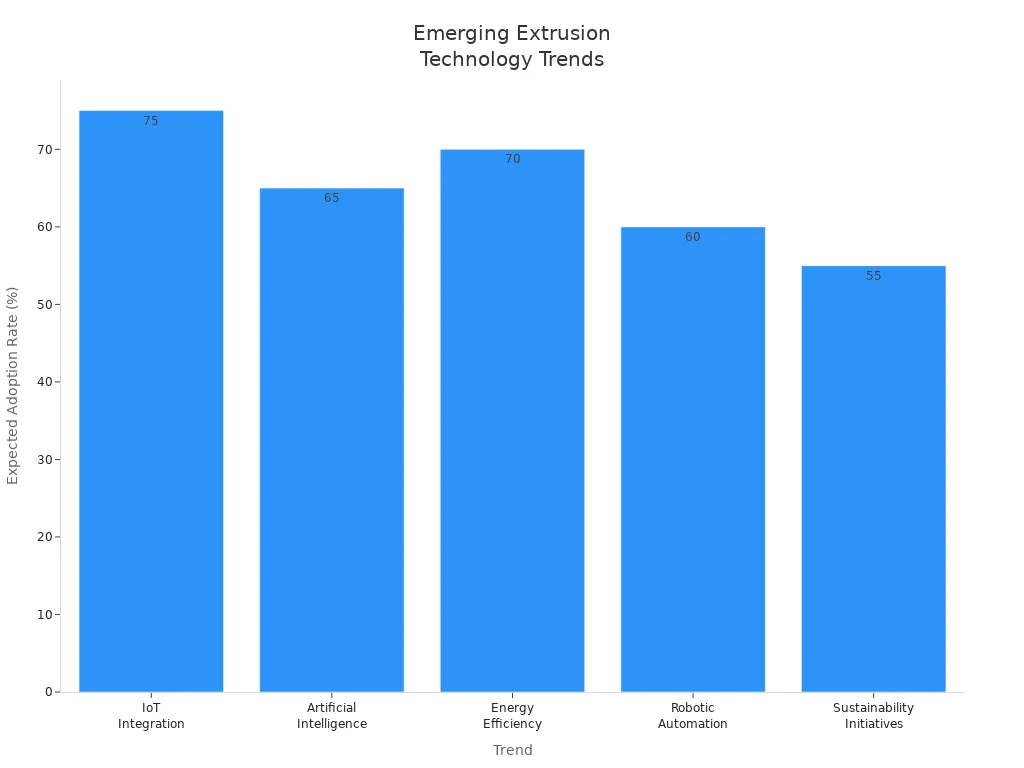
I see rapid changes in extrusion technology shaping the future of manufacturing. IoT integration allows real-time monitoring and analytics, doeltreffendheid te verbeter. Artificial intelligence supports predictive maintenance and optimization, which boosts performance. Energy efficiency is a growing focus, with manufacturers seeking ways to reduce consumption in the extrusion process. Robotic automation streamlines material handling and quality control. Sustainability initiatives drive the use of recycled materials and eco-friendly processes.
| Tendens | Beskrywing | Impak op doeltreffendheid | Verwagte Aannemingskoers (%) |
|---|---|---|---|
| IoT-integrasie | Intydse monitering en analise | Hoog | 75% |
| Kunsmatige Intelligensie | Voorspellende instandhouding en optimalisering | Baie hoog | 65% |
| Energiedoeltreffendheid | Reducing energy consumption | Medium | 70% |
| Robotiese outomatisering | Materiaalhantering en kwaliteitbeheer | Hoog | 60% |
| Volhoubaarheidsinisiatiewe | Herwinde materiaal en eko-vriendelike prosesse | Medium | 55% |
I notice advancements in material compatibility, especially with bioplastics, are transforming the extrusion industry. Many manufacturers now prioritize flexibility in equipment design, with modular systems allowing easy upgrades and modifications. Sustainability is essential, with most manufacturers focusing on energy-efficient equipment and waste reduction strategies. Smart extrusion machines reduce downtime by 20%, which improves overall efficiency and quality control. I always stay updated on these trends to maintain high performance and support new applications in plastic extrusion.
Wenk: I recommend reviewing the overview of extruder machines in manufacturing regularly. Staying informed about new types of extrusion machines and screw designs helps me adapt to changing production needs and maintain scalability.
I recognize that each extrusion system offers unique advantages and limitations. My experience shows that single-screw extruders excel in high-volume production, while twin-screw systems provide superior mixing and flexibility. Ram and co-extrusion machines support specialty applications. I always use comparison tables and selection criteria to evaluate:
- Technical capabilities and long-term reliability
- Customer service and design assistance
- Quality standards and energy efficiency
I recommend manufacturers understand their application needs and consult extrusion experts for optimal results.
Gereelde vrae
Wat is die belangrikste verskil tussen enkelskroef- en dubbelskroef-ekstruders?
I see that single-screw extruders use one rotating screw for basic mixing. Twin-screw extruders use two screws for advanced mixing and better control. I choose twin-screw systems for complex materials and higher flexibility.
How do I decide which extrusion system fits my application?
I start by reviewing my material type, produksie volume, and product complexity. I match these needs to the strengths of each system. I consult with experts if I face unique requirements.
Can I process recycled materials with extrusion systems?
I process recycled materials using twin-screw extruders. These machines handle variable feedstocks and additives better than single-screw systems. I monitor quality closely to ensure consistent results.
How often should I perform maintenance on my extruder?
I schedule routine inspections every month. I check for screw wear, barrel condition, and control system performance. Regular maintenance prevents downtime and extends equipment life.
What are the most common extrusion defects I encounter?
I often see surface roughness, dimensional drift, and melt fractures. I address these by adjusting temperature, skroef spoed, and material feed. I use process monitoring to catch issues early.
Is co-extrusion suitable for all materials?
I use co-extrusion mainly for thermoplastics. Some materials may not bond well in multi-layer profiles. I test material compatibility before starting production.
How does automation improve extrusion quality?
I rely on automation for real-time monitoring and precise control. Automated systems reduce human error, maintain consistent output, and improve overall product quality.
What safety measures do I follow during extrusion?
I wear protective gear and follow lockout procedures. I keep the work area clean and check emergency stops regularly. I train my team on safe operation and emergency response.